Building the playbook for how a 50+ person enterprise creative agency adopts generative AI responsibly — custom internal tools, a founder-led task force, and a culture of experimentation that doesn't put brand or compliance at risk.
Citi's in-house creative organization was under growing pressure to produce more — more journeys, more markets, more variations — without a proportional increase in headcount. At the same time, generative AI tools were already showing up in individual workflows across the 50+ person creative org, informally and without any shared standards.
In a regulated bank, that's not just a productivity story, it's a risk story: inconsistent outputs, no audit trail, and no clear line between experimentation and anything that could touch a customer, legal, or brand review.
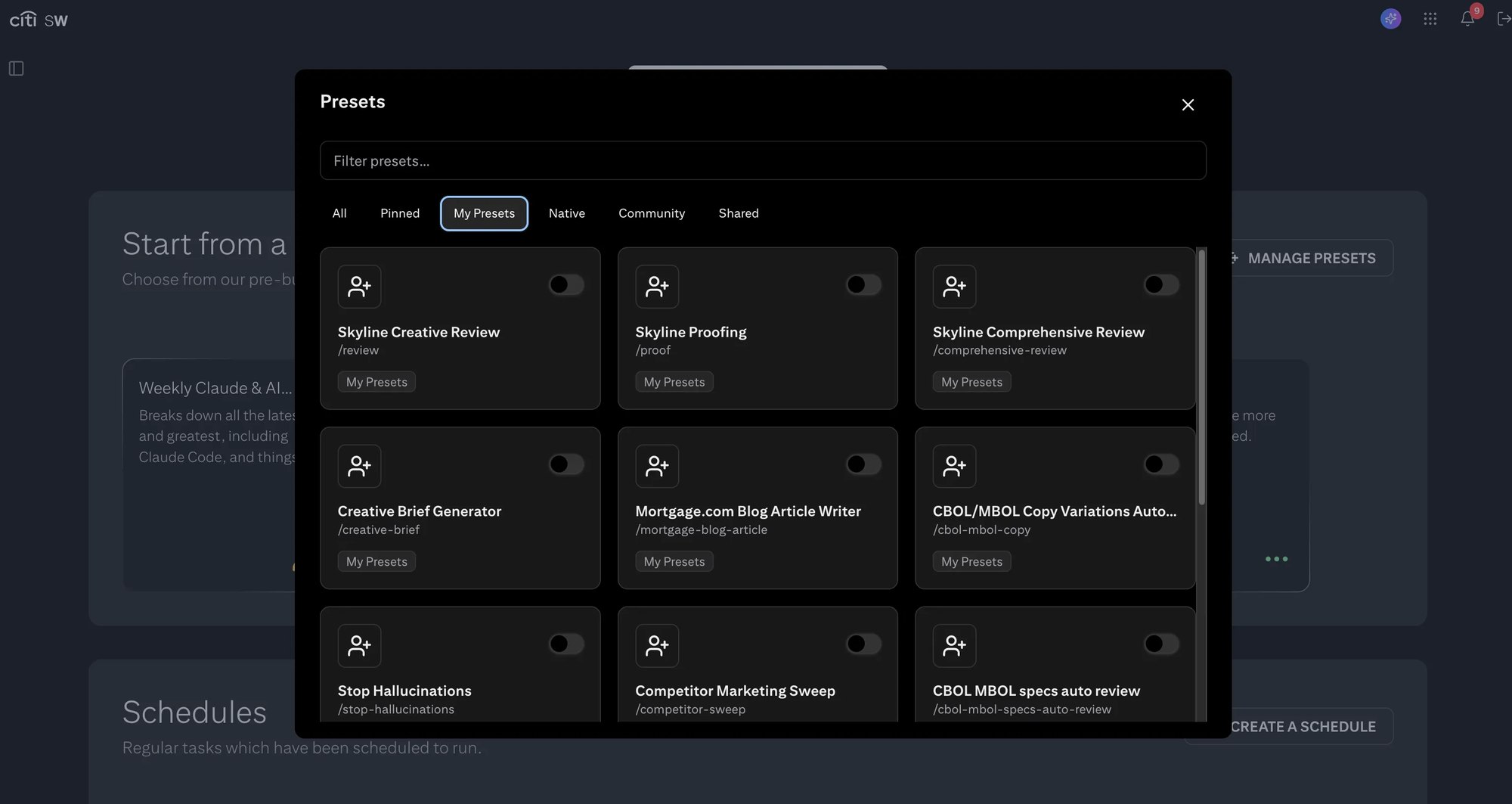
I founded Citi's internal AI Task Force and have led it since, personally training the 50+ person creative organization on responsible generative-AI usage, hosting recurring lunch-and-learns, and building decks that brief leadership on use cases and measurable impact. Alongside that, my team and I design, build, and run a growing set of custom AI tools aimed at specific, recurring bottlenecks in the creative workflow.
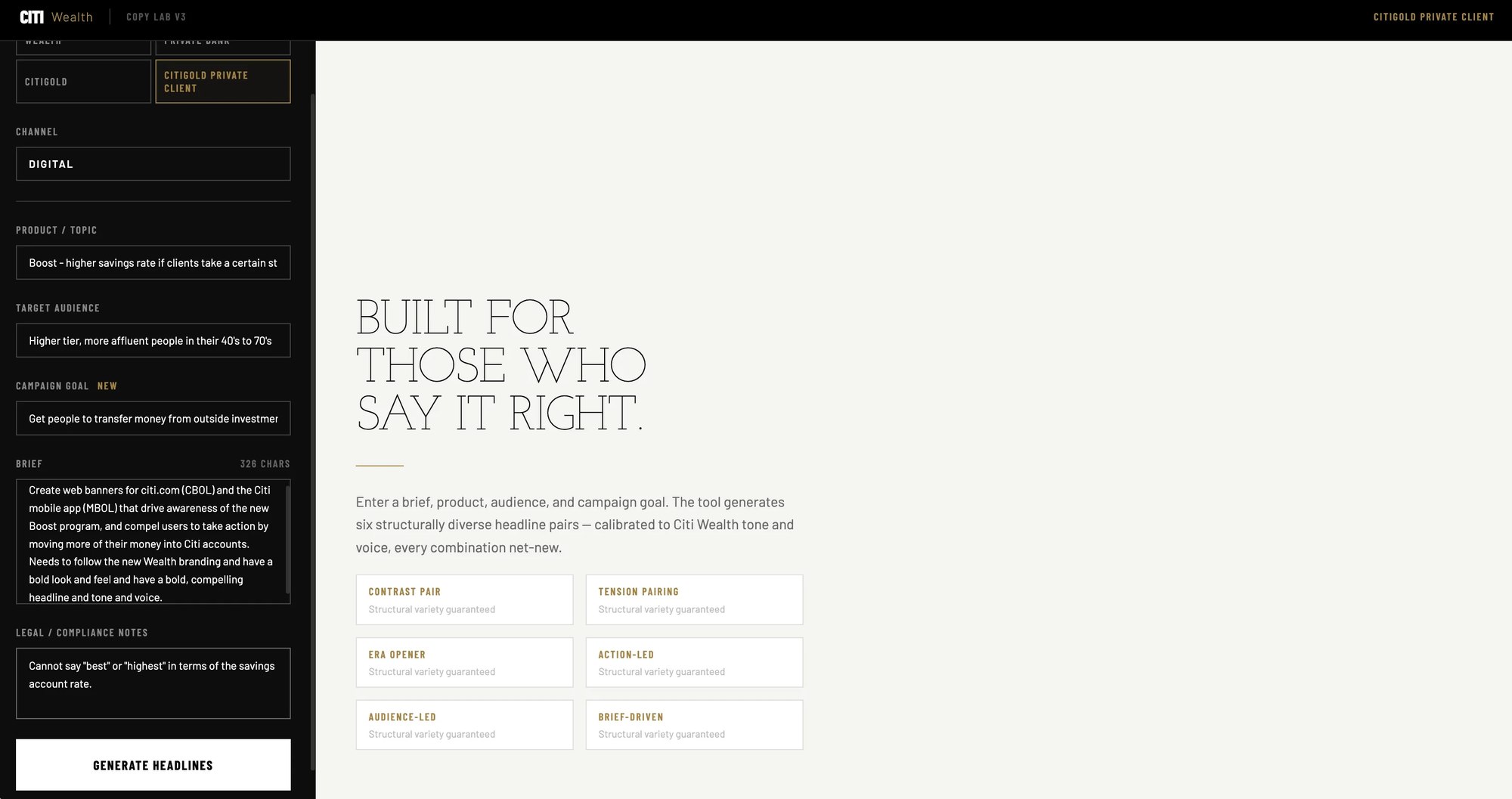
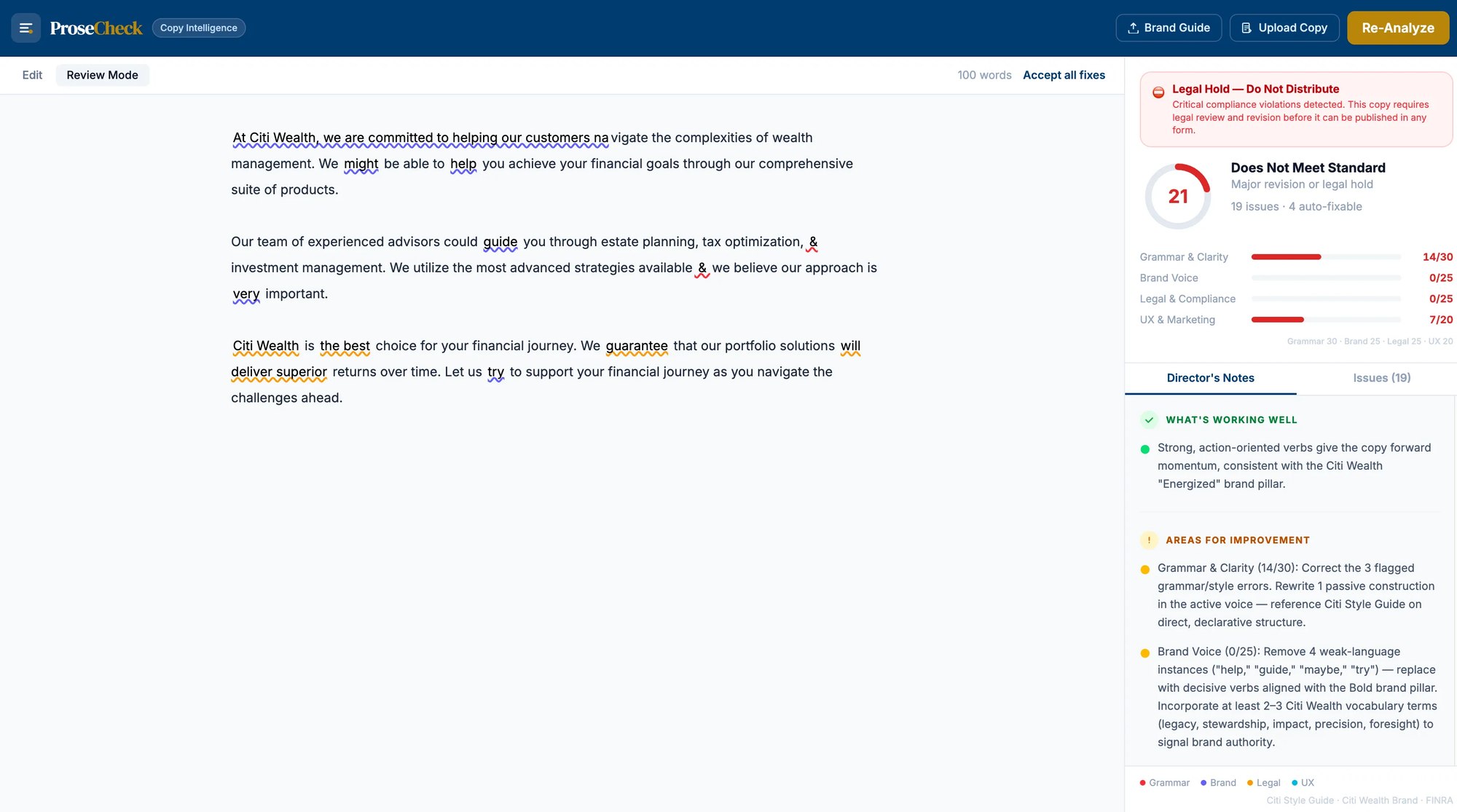
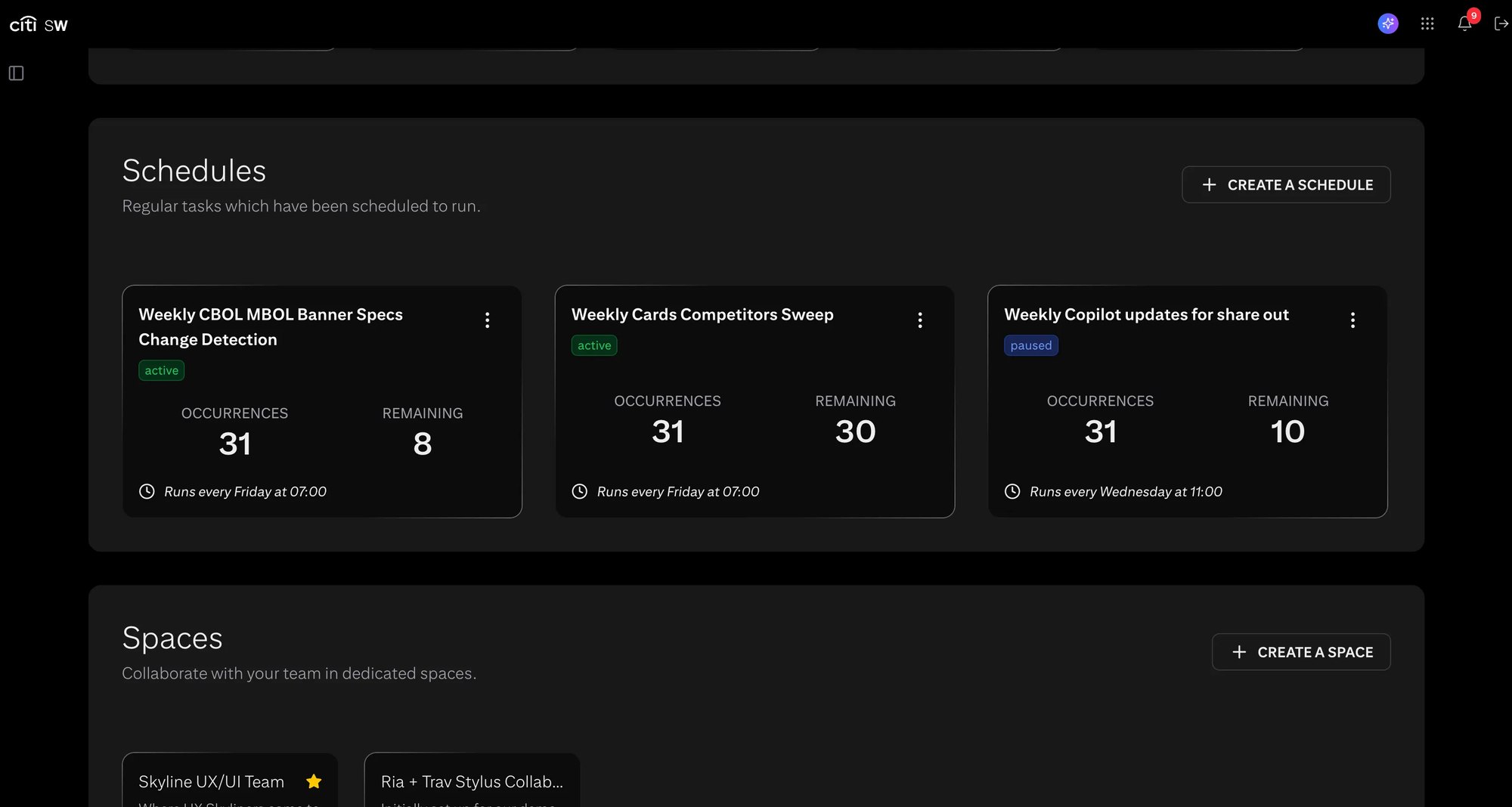
What follows is a small sample of those tools — a few can't be shown here because the work is IP and proprietary to Citi, but these give a clear sense of the range: from creative ideation, to compliance review, to the automation layer running quietly underneath both.
Beyond these tools, my team and I also work daily in Adobe's AI suite — Firefly and GenStudio — along with Microsoft Copilot and other licensed tools, and we code our own purpose-built utilities using LLMs including Gemini, Claude, and Grok. My design lead, Sandon Spalding, is a key partner in a lot of this work and is exceptionally strong with AI — his own tools aren't pictured here until he's ready to share them, but the broader push to drive AI fluency, experimentation, and responsible adoption runs across my team and the entire 50+ person agency, not just through me.
The task force and its tools gave Citi's creative organization a shared, sanctioned way to use AI — turning a scattered set of individual habits into an auditable, governed capability that legal and risk could sign off on, and that leadership now treats as a model for the rest of the business.
in annual cost avoidance validated, via insourcing and AI-enabled throughput
creatives trained on responsible generative-AI workflows
org-wide AI governance framework: guardrails, WCAG 2.1 AA, review process
A sample of the tools
More of this work is on its way as I'm able to share it — this page will keep growing alongside the task force itself.